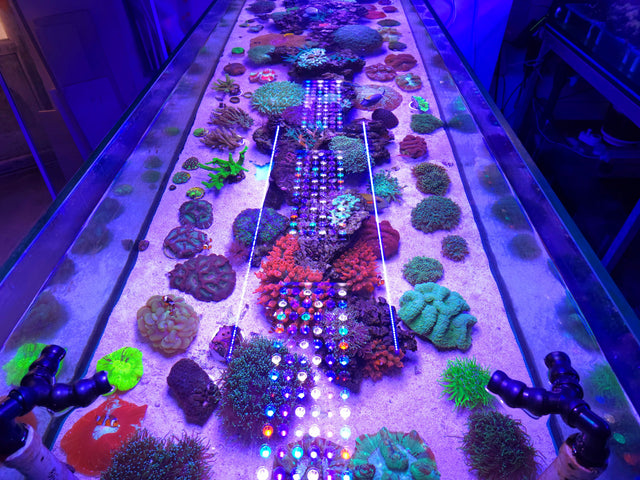
Haliotis snails, commonly known as abalone, are marine gastropods characterized by their single, smooth, and ear-shaped shell. They have a strong, muscular foot that they use to cling to rocks and other surfaces. The shell exterior is often smooth and covered by the mantle, making encrustations less common. Abalone also have a distinct row of breathing holes on their shell, which can vary in number and shape depending on the species.
Shell Characteristics:
Shape: Oval or elongated, with a relatively flat shell.
Surface: Smooth, with varying degrees of striations or ribs.
Color: Can range from dark green, blue, or black to reddish-brown, olive, or brown, with varying patterns and colors.
Perforations: A series of breathing holes (perforations) on the shell, typically on the left side, allow for water intake.
Inner Surface: Iridescent nacre that lines the inside of the shell, often with shades of pink, red, green, or blue.
Other Features:
Foot: Large, muscular foot used for attachment to substrates and movement.
Radula: A tongue-like band with many small teeth (radula) for scraping algae.
Gills: Symmetrical and well-developed gills for respiration.
Head: Head-lobes are fimbriated, and side-lobes are also fimbriated and cirrated.
Spire: The spire (apex of the shell) can be prominent or concealed, depending on the species
The Strombus dentatus, or toothed conch, is a marine gastropod mollusk in the family Strombidae, known for its distinctive shell. It's a relatively small conch, with a shell length ranging from about 22 to 52mm. The shell has a flaring outer lip with a notch near the anterior end, and is characterized by three pointed projections near the opening. It is found in the Indo-Pacific region, typically at low tide marks.
Here's a more detailed description:
Shell Shape and Size: The shell is relatively small, with a maximum size of 6 cm (male/unsexed). It is elongate and moderately large.
Outer Lip: The outer lip is flared and features a stromboid notch, a key characteristic of the Strombidae family. It also has three pointed projections near the anterior end.
Color: The shell can be cream, orange, or salmon-pink.
Surface: It has a relatively smooth surface, though it can have spines on the body whorl.
Spire: The spire is short and pointed.
Habitat: Strombus dentatus is typically found in shallow, sandy waters, sometimes buried in sand or rubble, on seaward reefs at depths of 5 to 25m.
Distribution: They are found in the Indo-Pacific region, including the Red Sea, Indian Ocean, and Pacific Ocean
Babylonia lutosa, commonly known as the lutose Babylon, is a species of marine gastropod mollusk, or sea snail, belonging to the family Babyloniidae. These snails are characterized by their brown or yellowish-brown shells with darker spiral bands, often reaching up to 4 cm in length. The body of the snail is typically pale yellowish-brown with darker spots. They are nocturnal and burrow into sediment during the day, earning them the nickname "mud snails".
Here's a more detailed description:
Shell: The shell is typically brown or yellowish-brown with darker spiral bands.
Size: It can grow up to 4 cm in length.
Body: The body is usually pale yellowish-brown with darker spots.
Behavior: They are active at night and burrow into sediment during the day.
Habitat: They are found in marine environments, often in muddy or sandy bottoms.
Distribution: Their distribution ranges from Japan to Sri Lanka.
Scientific Classification: They belong to the order Neogastropoda, family Babyloniidae
Mitra papalis, commonly known as the Papal Mitre or Pontifical Mitre, is a species of sea snail in the Mitridae family. These snails are characterized by their large, white shells with vibrant red-orange or purplish blotches, and their overall form resembling a Papal mitre. They can reach lengths of up to 166 millimeters (6.5 inches).
Here's a more detailed description:
Shape:
The shells are elongate to ovate, fusiform, and smooth, lacking axial streaks.
Color:
The shell surface is typically white with small, white nodules under the sutures.
Blotches:
They have several rows of irregular, bright red-orange or purplish blotches.
Aperture:
The aperture is moderately wide and smooth on the inside.
Sutures:
Sutural coronations are present, and the sutures are more adpressed compared to similar species like Mitra stictica.
Similarities to Mitra stictica:
Mitra papalis is similar to Mitra stictica, but it has a longer body form, more adpressed sutures, and wider nodules.
Tripneustes gratilla, commonly known as the collector urchin or Halloween urchin, is a species of sea urchin. It's a herbivorous echinoderm found in various tropical habitats like coral reefs, seagrass meadows, and algal forests. These urchins have a dark, often bluish-purple test (shell) with white or orange spines, sometimes completely white or orange-tipped.
Key Features and Behaviors:
Color: While typically dark, their spines can vary from white to orange, with some having orange tips or being entirely white.
Test: The test is usually dark, especially in interradial regions, which are the areas between the spines.
Spines: They possess long, obvious spines, and their spines are often inclined towards adjacent ambulacra, giving the appearance of a pentaradiate cross.
Podia: These urchins have long and obvious tube feet (podia) that help them move and collect debris.
Diet: Tripneustes gratilla is herbivorous, feeding primarily on algae.
Habitat: They are found in a variety of tropical habitats, including coral reefs, seagrass meadows, and algal forests.
Covering Behavior: They are known for their "covering behavior," using tube feet to cover their aboral (top) surface with debris like rocks and other materials.
Predators: Common predators include pufferfishes, octopuses, and humans.
Venom: They possess venom but it doesn't typically cause severe stings.
Edibility: While they are not the most commonly consumed sea urchin, some cultures do eat their gonads.
Other names: They are also known as cake, Parson's hat, Halloween, Hawaiian, priest-hut, pincushion, and hairy sea urchins
Diadema setosum, commonly called the diadem urchin or long-spined sea urchin, is a species of long-spined sea urchin known for its distinct five white dots and extremely long, hollow, mildly venomous spines. It's a typical sea urchin, with a round, hard shell (test) and numerous spines. Diadema setosum is primarily found in the Indo-Pacific region, including areas from Australia and Africa to Japan and the Red Sea.
Key Features:
Spines: Long, hollow, and sharp spines that can cause painful stings, though only slightly venomous.
Test: A round, hard shell made of fused plates.
Color: Black or dark brown, with five distinctive white spots on its body.
Habitat: Shallow tropical reefs in the Indo-Pacific, from Australia to Japan and the Red Sea.
Behavior: Primarily a grazer, active at night, and vulnerable to predation from fish.
Size: Maximum test diameter of 90 mm.
Symbiotic relationships: Can host the urchin shrimp Stegopontonia commensalis.
Diet: Algae.
Distinguishing Features:
Diadema setosum can be distinguished from its sister species, D. savignyi, by the presence of white spots on its test, while D. savignyi has blue markings.
Leptastrea is a genus of stony corals, often described as "encrusting" or "plocoid," meaning they grow in a flat, dome-like shape by covering the substrate. They are relatively beginner-friendly corals, known for their diverse color variations and a tendency towards slower growth compared to some other encrusting corals. Leptastrea colonies typically have small, barrel-shaped corallites with distinct grooves and tubercles.
Key features of Leptastrea corals:
Growth Form: Encrusting or plocoid, forming flat or dome-shaped colonies.
Corallites: Small, barrel-shaped corallites with grooves and tubercles separating them.
Color: Available in a wide range of colors, including cream, green, yellow, and variations of these.
Growth Rate: Generally slow-growing, making them suitable for smaller tanks or aquascapes where rapid growth is undesirable.
Lighting: Can tolerate a range of lighting conditions, from lower to moderate.
Current: Often found in areas with moderate to high water movement.
Care: Considered beginner-friendly, but proper feeding (small food particles) and adequate water parameters are important.
Stinging: Leptastrea have a stinging power, so spacing them appropriately from other corals is recommended.
Lithophyllon is a genus of stony corals belonging to the family Fungiidae, also known as mushroom corals. They are encrusting corals that can grow as colonies, though they are now more commonly found as solitary polyps. Lithophyllon are typically found in shallow reef environments and are considered uncommon.
Key Characteristics:
Colony Formation: Lithophyllon can form colonies, with some species having a central corallite distinguishable in smaller colonies.
Appearance: They are often tan in color and can resemble other corals like Cantharellus jebbi.
Habitat: They inhabit shallow reef environments.
Tentacles: Their tentacles are usually extended only at night.
Species:
Lithophyllon repanda (Oval mushroom coral), Lithophyllon undulatum (Stone leaf coral), Lithophyllon ranjithi, and Lithophyllon lobata.
Acanthurus pyroferus, also known as the chocolate surgeonfish or mimic surgeonfish, is a species of surgeonfish. Adults are typically dark brown or purplish-black with a yellowish tan anterior. They have a distinct orange patch at the gill opening and a prominent yellow band on the posterior margin of their caudal fin. Juveniles exhibit different color patterns that mimic other fish species like lemonpeel angelfish.
Key features of Acanthurus pyroferus:
Size: They can grow up to 29 cm (11 inches) in length.
Coloration: Adults are usually dark brown to purplish-black, sometimes with a yellowish tan anterior. They have an orange patch at the gill opening and a yellow band on their tail.
Fins: The dorsal fin has 8 spines and 27-30 soft rays, while the anal fin has 3 spines and 24-28 soft rays. The tail fin edge is lunate in adults and round in juveniles.
Tail Spine: A single, depressible spine on the side of the tail base, which is part of their defense mechanism.
Diet: They are herbivores and primarily graze on algae.
Habitat: Found in reef environments, including the Indo-Pacific region, the Red Sea, and the Indian Ocean
Homophyllia bowerbanki orange is a coral known for its encrusting growth form, often with a central, prominent corallite. Red Bowerbanki, a variety of Homophyllia bowerbanki, typically displays shades of pale gray, brown, or rust, often with a marbled or mottled appearance. It's not fleshy and has irregularly shaped, cerioid corallites. While typically smaller, they can grow to over 1.5 meters in diameter.
Archaster typicus, commonly known as the sand sifting starfish or common sea star, is a marine invertebrate with a flat, gray or brownish body. They have five long, slightly tapering arms, though variations with three, four, or even six arms can occur. These starfish are adapted to life on sandy seabeds, where they bury themselves during high tide and move on the surface during low tide.
Key Characteristics:
Shape and Size: Five-limbed star with long, slightly tapering arms. Adults reach 12-15 cm in diameter.
Coloration: Grey or brownish, often with darker and lighter patches, sometimes forming a chevron pattern. Underside is pale.
Habitat: Sandy seabed, where they burrow and move over the surface.
Feeding: They are detritivores, feeding on organic matter in the sand.
Behavior: Active in the top layers of the sand, stirring it to prevent sediment buildup and promote oxygenation.
In Marine Aquariums:
Beneficial: They are popular in reef aquariums for cleaning and aerating the sand bed.
Peaceful and Reef-Safe: They are peaceful and won't harm fish, corals, or other invertebrates.
Maintenance: Require a thick sandy bottom and proper water conditions (temperature, pH).
Deep Cleaning: They stir the top layers of sand (up to 3 cm deep) but don't clean deeply below that.
Conomurex luhuanus, commonly known as the Strawberry Conch or Tiger Conch, is a medium-sized sea snail. It's a marine gastropod mollusk belonging to the family Strombidae, which includes true conchs. These snails are known for their vibrant shell interiors, typically colored orange, red, or pink, with a black or chocolate-brown inner lip border.
Here's a more detailed description:
Appearance:
The shell exterior can have a mottled, striped, or banded pattern, often with pink and white colors reminiscent of strawberries. The interior of the shell is the most striking feature, showcasing bright shades of orange, red, or pink.
Size:
Conomurex luhuanus can grow up to 8 cm (approximately 3 inches) in length.
Diet:
These snails are herbivores, feeding on algae, detritus, and organic matter. They also consume bristleworms and cyanobacteria.
Habitat:
They are found in the Indo-Pacific region, inhabiting sandy bottoms of coral reefs, seagrass beds, and coral rubble. They can also be found in coastal lagoons and other protected areas with clear bottom.
Behavior:
Conomurex luhuanus are known for their high visual acuity, with some studies suggesting they can resolve objects with high spatial resolution.
Ecological Role:
They play a vital role in marine ecosystems by consuming algae, detritus, and other organic matter, contributing to the overall health of the environment.
Social Behavior:
They can be found in colonies, both with juvenile and mixed age-class individuals.