AquaNova NMDP-3
Dosing pump 5,5W , 70x3 ml/m
Aqua Nova Dosing pumps are used for administering fluids (fertilizers, salt) in the specified amounts to your aquariums.
The dosing pumps have an accuracy of 1 ml and a specific times schedule can be implemented so you don t forget to maintain your aquarium. This professional pump
Dosing frees the user from having to remember about fertilization aquarium and provides an even steady measurement.
The Aqua Nova dosing pumps come with the possibility of setting up to 24 dosages for each pump and a large range of intervals (breaks in the administration)
From 0 to 30 days. This allows you to determine very precisely the dosage of fertilizers both in freshwater
and sea aquarium. Very low power consumption through the use of energy-efficient pumps.
Service in Poland, the device covered by a 2 year warranty protection and professional service post-warranty service.
Contains 9-language instruction manual.
The AquaNova NUVC-55 UV Sterilizer destroys algae in the water, fights bacteria and parasites dangerous for farmed fish and plants, while eliminating the causes of most diseases - gives the effect of crystal clear water
36watt UV Complete unit Max 20 000 L per hour flow rate
Suitable for marine, fresh water and pond applications.
The AquaNova NUVC-36 UV Sterilizer destroys algae in the water, fights bacteria and parasites dangerous for farmed fish and plants, while eliminating the causes of most diseases - gives the effect of crystal clear water
36watt UV Complete unit Max 15 000 L per hour flow rate
Suitable for marine, fresh water and pond applications.
The AquaNova NUVC-18 UV Sterilizer destroys algae in the water, fights bacteria and parasites dangerous for farmed fish and plants, while eliminating the causes of most diseases - gives the effect of crystal clear water
18watt UV Complete unit Max 9000 L per hour flow rate
Suitable for marine, fresh water and pond applications.
Skimz Monzter SM207DC protein skimmer features a low wattage DC needlewheel pump.Skimz SM207DC draws an air intake of 1,800 litres per hour and is suitable for aquariums up to 2,000 litres.Skimmer Specification:• Footprint: 280 x 270mm (11" x 10 5/8")• Total height: 580mm (22 13/16")• Body diameter: 200mm (7 7/8")• Recommended sump water height: 180 - 240mm (7 1/16" to 9 7/16")• Installation: Designed for in-sump usePump: 1 Skimz QPS6.0 with six preset RPMs and food shutter timerAir Intake: 900 - 1,800 l/hTotal Watts: 13 - 35WFor Aquarium: up to 2,000 l
Ecotech Marine Radion XR15 G6 Blue - Delivery on demand
EcoTech aims to bring you the absolute best of what’s technologically possible.
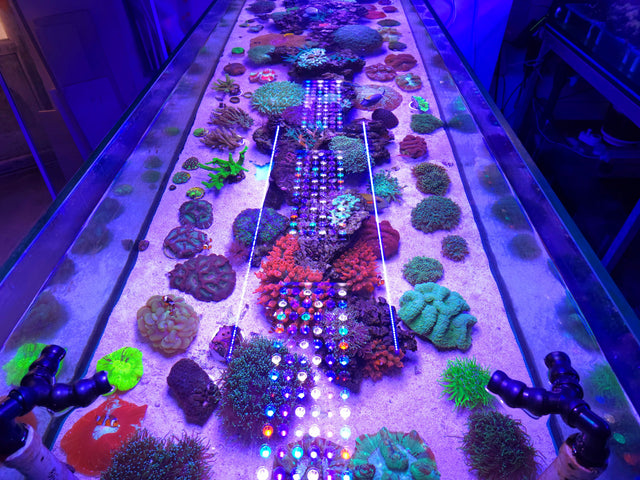
In the aquarium, enjoy richer colors, pop more fluorescence and create the ultimate balance between crisp and actinic. From its inception, Radion has set the standard for what full spectrum aquarium LED lighting can be. The 6th generation pushes the limits of color rendition and fluorescence without sacrificing any of the famous flexibility that caters to the desire of the user.
With the addition of 395nm diodes, G6 pushes deeper into the UV range, achieving a new level of coral and fish fluorescence. Both Blue and Pro models also feature a rebalancing of color channels and LED (Diode) mix to augment the most flexible and balanced spectra available in aquarium lighting.
Better than ever! The G6 Hybrid Hemispherically Edge Illuminating (HEI2) optic system combined with LED placement and form factor delivers beautiful shimmer, super color mixing, ridiculously even PAR, mind-blowing spread and even the ability to adjust the type of blue hue that you love the most.
Mind-blowing Spread
Ultimate Fluorescence
Intense Full Spectrum Color
Fully programmable
Wireless Control
Moonlight
Weather Simulation
Technologically Superior Design
Premium Quality Components
Unmatched Support and Service
Extensive Mounting Options
Optional Diffuser Accessory
Spread so wide it has to be seen to be believed.
Radion G6 increases output from an impressive 110.5 degrees in the G5 to a staggering 126.3 degrees.
This improvement was achievable through a change to the primary optic on the LEDs which then integrates with the geometry in the existing HEI (Hemispherically Edge Illuminating) secondary optic (lens).
Hemispherical Edge Illumination
Radion is a winner in the cost vs. output equation. The HEI2 optical system delivers 126.3 degrees of output. The result, incredibly even PAR over almost 4ft of coverage area making it the highest average output Radion and perhaps the most efficient aquarium light ever made.
RADION
G6 Blue
For those who love Blue – we present G6 Blue!
Bluer in every way and then some. Adjustments to the diode mix offer new depths of color intensity. With so much Blue, G6 now creates the opportunity to tune the Blue look between actinic and crisp. The addition of 395nm to the LED cluster pushes fluorescence in fish and corals to the next level.
EcoTech aims to bring you the absolute best of what’s technologically possible.
In the aquarium, enjoy richer colors, pop more fluorescence and create the ultimate balance between crisp and actinic. From its inception, Radion has set the standard for what full spectrum aquarium LED lighting can be. The 6th generation pushes the limits of color rendition and fluorescence without sacrificing any of the famous flexibility that caters to the desire of the user.
With the addition of 395nm diodes, G6 pushes deeper into the UV range, achieving a new level of coral and fish fluorescence. Both Blue and Pro models also feature a rebalancing of color channels and LED (Diode) mix to augment the most flexible and balanced spectra available in aquarium lighting.
Better than ever! The G6 Hybrid Hemispherically Edge Illuminating (HEI2) optic system combined with LED placement and form factor delivers beautiful shimmer, super color mixing, ridiculously even PAR, mind-blowing spread and even the ability to adjust the type of blue hue that you love the most.
Mind-blowing Spread
Ultimate Fluorescence
Intense Full Spectrum Color
Fully programmable
Wireless Control
Moonlight
Weather Simulation
Technologically Superior Design
Premium Quality Components
Unmatched Support and Service
Extensive Mounting Options
Optional Diffuser Accessory
Spread so wide it has to be seen to be believed.
Radion G6 increases output from an impressive 110.5 degrees in the G5 to a staggering 126.3 degrees.
This improvement was achievable through a change to the primary optic on the LEDs which then integrates with the geometry in the existing HEI (Hemispherically Edge Illuminating) secondary optic (lens).
Hemispherical Edge Illumination
Radion is a winner in the cost vs. output equation. The HEI2 optical system delivers 126.3 degrees of output. The result, incredibly even PAR over almost 4ft of coverage area making it the highest average output Radion and perhaps the most efficient aquarium light ever made.
RADION
G6 Pro
The Radion Pro is responsible for lighting public aquariums, aquaculture facilities and coral spawning laboratories worldwide. Despite this, our most important user is the discerning home aquarist. Unbeatable in balanced output the G6 PRO carries the tradition further with extra capability in the blue and UV spectrum and mind-blowing additional spread!
Ultra Reef Akula UKS 180 (DC24V)
Installation Inside the Sump
TankWater level: 22 cm
300–700 l
eAir intake: 300–800 l/h
Power consumption: 16–25 W
Base footprint: 19 x 25 cm
Height: 56 cm
Pump: SICCE SDC 1000+
Type: DC24V
Power supply: 220V 60hz
About us
Founded in 1957, our company has always produced hydraulic and fluid dynamic equipment with passion and dedication. In 2011, we introduced the Ultra Reef line, bringing over half a century of design and manufacturing experience to the world of aquariums and aquaculture. Every product we create reflects the craftsmanship and attention to detail that define Italian excellence
Built to last
Every Ultra Reef product is the result of careful technical and aesthetic design. Thanks to CNC machining from solid PVC blocks, we ensure exceptional durability and long-term reliable performance. Our goal is excellence, pursued through the continuous improvement of our manufacturing processes
Italian design and
manufacturing
Our philosophy is based on quality, not quantity. We offer a carefully developed selection of products, all entirely made in Italy. Every Ultra Reef device is designed and assembled in our Milan facility using only the highest quality materials, becoming a benchmark for those seeking the best for their aquarium
Quality and support
Ultra Reef stands for reliability, thanks to a solid after-sales support service. Our technical team and in-house workshop are always ready to assist customers, solve any issues, and provide fast and effective solutions. Our ISO 9001 quality system doesn’t guarantee infallibility, but it ensures that, when needed, we are always ready to take action—constantly improving through experience and direct feedback from our customers
What is a protein skimmer?
A protein skimmer is a mechanical filter that removes dissolved organic substances from the water in a marine aquarium, improving water quality and the health of the animals. It is essential in marine aquariums because by removing excess proteins before they decompose, it reduces the load on the biological filtration system and helps maintain the nitrogen cycle in balance. This helps ensure a healthy and stable environment with low levels of nitrates and phosphates.
The Skimming Process
It works through "foam fractionation," a process that uses air bubbles to separate and eliminate impurities such as proteins, oils, food residues, and metabolic waste from the seawater. A pump mixes water and air, creating microbubbles that rise up through the skimmer column, capturing impurities and forming a dense foam that collects at the top and is collected in a cup to be emptied periodically.
The Right Size
Choosing the right skimmer is crucial to ensure stability, efficiency, and longevity in your marine aquarium. Each tank has different needs, which is why our models are designed to fit various setups, volumes, and organic loads. Keep in mind that this table is just our recommendation, based on tests and years of experience. Ultimately, it is the expertise and judgment of the aquarium keeper that really makes the difference. The calculations are based on the metric system; gallon conversions are rounded.
Don’t Overdo It
While a skimmer that is too small can be compensated by more careful feeding management, a skimmer that is too large works out of balance and becomes inefficient. In fact, if the organic load is too low, the skimmer may excessively deplete the water, making it unsuitable for soft corals, or worse, it may operate "intermittently," alternating between skimming moments and phases where it produces only clear water. This unstable behavior often causes the skimmer to "go crazy," requiring continuous adjustments and fluctuating water levels
Ultra Reef Akula UKS 200 (DC24V)
Installation Inside the Sump
TankWater level: 22 cm
300–900 lit (80–240 US gal)
eAir intake: 300–1200 l/h
Power consumption: 16–35 W
Base footprint: 21 x 27 cm
Height: 56 cm
Pump: SICCE SDC 1200+
Type: DC24V
Power supply: 220V 60hz
About us
Founded in 1957, our company has always produced hydraulic and fluid dynamic equipment with passion and dedication. In 2011, we introduced the Ultra Reef line, bringing over half a century of design and manufacturing experience to the world of aquariums and aquaculture. Every product we create reflects the craftsmanship and attention to detail that define Italian excellence
Built to last
Every Ultra Reef product is the result of careful technical and aesthetic design. Thanks to CNC machining from solid PVC blocks, we ensure exceptional durability and long-term reliable performance. Our goal is excellence, pursued through the continuous improvement of our manufacturing processes
Italian design and
manufacturing
Our philosophy is based on quality, not quantity. We offer a carefully developed selection of products, all entirely made in Italy. Every Ultra Reef device is designed and assembled in our Milan facility using only the highest quality materials, becoming a benchmark for those seeking the best for their aquarium
Quality and support
Ultra Reef stands for reliability, thanks to a solid after-sales support service. Our technical team and in-house workshop are always ready to assist customers, solve any issues, and provide fast and effective solutions. Our ISO 9001 quality system doesn’t guarantee infallibility, but it ensures that, when needed, we are always ready to take action—constantly improving through experience and direct feedback from our customers
What is a protein skimmer?
A protein skimmer is a mechanical filter that removes dissolved organic substances from the water in a marine aquarium, improving water quality and the health of the animals. It is essential in marine aquariums because by removing excess proteins before they decompose, it reduces the load on the biological filtration system and helps maintain the nitrogen cycle in balance. This helps ensure a healthy and stable environment with low levels of nitrates and phosphates.
The Skimming Process
It works through "foam fractionation," a process that uses air bubbles to separate and eliminate impurities such as proteins, oils, food residues, and metabolic waste from the seawater. A pump mixes water and air, creating microbubbles that rise up through the skimmer column, capturing impurities and forming a dense foam that collects at the top and is collected in a cup to be emptied periodically.
The Right Size
Choosing the right skimmer is crucial to ensure stability, efficiency, and longevity in your marine aquarium. Each tank has different needs, which is why our models are designed to fit various setups, volumes, and organic loads. Keep in mind that this table is just our recommendation, based on tests and years of experience. Ultimately, it is the expertise and judgment of the aquarium keeper that really makes the difference. The calculations are based on the metric system; gallon conversions are rounded.
Don’t Overdo It
While a skimmer that is too small can be compensated by more careful feeding management, a skimmer that is too large works out of balance and becomes inefficient. In fact, if the organic load is too low, the skimmer may excessively deplete the water, making it unsuitable for soft corals, or worse, it may operate "intermittently," alternating between skimming moments and phases where it produces only clear water. This unstable behavior often causes the skimmer to "go crazy," requiring continuous adjustments and fluctuating water levels
Ultra reef Typhoon 250 - protein skimmer
Installation Inside the Sump
TankWater level: 22 cm
500–2000 l
Air intake: 500–2300 lit/h
Power consumption: 16–58 W
Base footprint: 45 x 35 cm
Height: 65 cm
Pump: SICCE SDC 4000+
Type: DC24V
Power supply: 220V 60hz
About us
Founded in 1957, our company has always produced hydraulic and fluid dynamic equipment with passion and dedication. In 2011, we introduced the Ultra Reef line, bringing over half a century of design and manufacturing experience to the world of aquariums and aquaculture. Every product we create reflects the craftsmanship and attention to detail that define Italian excellence
Built to last
Every Ultra Reef product is the result of careful technical and aesthetic design. Thanks to CNC machining from solid PVC blocks, we ensure exceptional durability and long-term reliable performance. Our goal is excellence, pursued through the continuous improvement of our manufacturing processes
Italian design and
manufacturing
Our philosophy is based on quality, not quantity. We offer a carefully developed selection of products, all entirely made in Italy. Every Ultra Reef device is designed and assembled in our Milan facility using only the highest quality materials, becoming a benchmark for those seeking the best for their aquarium
Quality and support
Ultra Reef stands for reliability, thanks to a solid after-sales support service. Our technical team and in-house workshop are always ready to assist customers, solve any issues, and provide fast and effective solutions. Our ISO 9001 quality system doesn’t guarantee infallibility, but it ensures that, when needed, we are always ready to take action—constantly improving through experience and direct feedback from our customers
What is a protein skimmer?
A protein skimmer is a mechanical filter that removes dissolved organic substances from the water in a marine aquarium, improving water quality and the health of the animals. It is essential in marine aquariums because by removing excess proteins before they decompose, it reduces the load on the biological filtration system and helps maintain the nitrogen cycle in balance. This helps ensure a healthy and stable environment with low levels of nitrates and phosphates.
The Skimming Process
It works through "foam fractionation," a process that uses air bubbles to separate and eliminate impurities such as proteins, oils, food residues, and metabolic waste from the seawater. A pump mixes water and air, creating microbubbles that rise up through the skimmer column, capturing impurities and forming a dense foam that collects at the top and is collected in a cup to be emptied periodically.
The Right Size
Choosing the right skimmer is crucial to ensure stability, efficiency, and longevity in your marine aquarium. Each tank has different needs, which is why our models are designed to fit various setups, volumes, and organic loads. Keep in mind that this table is just our recommendation, based on tests and years of experience. Ultimately, it is the expertise and judgment of the aquarium keeper that really makes the difference. The calculations are based on the metric system; gallon conversions are rounded.
Don’t Overdo It
While a skimmer that is too small can be compensated by more careful feeding management, a skimmer that is too large works out of balance and becomes inefficient. In fact, if the organic load is too low, the skimmer may excessively deplete the water, making it unsuitable for soft corals, or worse, it may operate "intermittently," alternating between skimming moments and phases where it produces only clear water. This unstable behavior often causes the skimmer to "go crazy," requiring continuous adjustments and fluctuating water levels
Ultra Reef Typhoon 200
Installation Inside the Sump
TankWater level: 22 cm
400–1200 l
Air intake:300–1400 lit/h
Power consumption:10–36 W
Base footprint:39 x 29 cm
Height:60 cm
Pump:SICCE SDC 2600+
Type:DC24V
Power supply:220V 60hz
About us
Founded in 1957, our company has always produced hydraulic and fluid dynamic equipment with passion and dedication. In 2011, we introduced the Ultra Reef line, bringing over half a century of design and manufacturing experience to the world of aquariums and aquaculture. Every product we create reflects the craftsmanship and attention to detail that define Italian excellence
Built to last
Every Ultra Reef product is the result of careful technical and aesthetic design. Thanks to CNC machining from solid PVC blocks, we ensure exceptional durability and long-term reliable performance. Our goal is excellence, pursued through the continuous improvement of our manufacturing processes
Italian design and
manufacturing
Our philosophy is based on quality, not quantity. We offer a carefully developed selection of products, all entirely made in Italy. Every Ultra Reef device is designed and assembled in our Milan facility using only the highest quality materials, becoming a benchmark for those seeking the best for their aquarium
Quality and support
Ultra Reef stands for reliability, thanks to a solid after-sales support service. Our technical team and in-house workshop are always ready to assist customers, solve any issues, and provide fast and effective solutions. Our ISO 9001 quality system doesn’t guarantee infallibility, but it ensures that, when needed, we are always ready to take action—constantly improving through experience and direct feedback from our customers
What is a protein skimmer?
A protein skimmer is a mechanical filter that removes dissolved organic substances from the water in a marine aquarium, improving water quality and the health of the animals. It is essential in marine aquariums because by removing excess proteins before they decompose, it reduces the load on the biological filtration system and helps maintain the nitrogen cycle in balance. This helps ensure a healthy and stable environment with low levels of nitrates and phosphates.
The Skimming Process
It works through "foam fractionation," a process that uses air bubbles to separate and eliminate impurities such as proteins, oils, food residues, and metabolic waste from the seawater. A pump mixes water and air, creating microbubbles that rise up through the skimmer column, capturing impurities and forming a dense foam that collects at the top and is collected in a cup to be emptied periodically.
The Right Size
Choosing the right skimmer is crucial to ensure stability, efficiency, and longevity in your marine aquarium. Each tank has different needs, which is why our models are designed to fit various setups, volumes, and organic loads. Keep in mind that this table is just our recommendation, based on tests and years of experience. Ultimately, it is the expertise and judgment of the aquarium keeper that really makes the difference. The calculations are based on the metric system; gallon conversions are rounded.
Don’t Overdo It
While a skimmer that is too small can be compensated by more careful feeding management, a skimmer that is too large works out of balance and becomes inefficient. In fact, if the organic load is too low, the skimmer may excessively deplete the water, making it unsuitable for soft corals, or worse, it may operate "intermittently," alternating between skimming moments and phases where it produces only clear water. This unstable behavior often causes the skimmer to "go crazy," requiring continuous adjustments and fluctuating water levels
SKIMMER 190
Installation Inside the Sump
TankWater level: 22 cm (8.7 inches)
300–900 lit (80–240 US gal)
eAir intake:300–1200 lit/h
Power consumption:16–35 W
Base footprint:21 x 27 cm (8.3 x 10.7 inch)
Height:56 cm
Pump:SICCE PSK SDC 1000/1200+
Type:DC24V
Power supply:110/220V 50/60hz
About us
Founded in 1957, our company has always produced hydraulic and fluid dynamic equipment with passion and dedication. In 2011, we introduced the Ultra Reef line, bringing over half a century of design and manufacturing experience to the world of aquariums and aquaculture. Every product we create reflects the craftsmanship and attention to detail that define Italian excellence
Built to last
Every Ultra Reef product is the result of careful technical and aesthetic design. Thanks to CNC machining from solid PVC blocks, we ensure exceptional durability and long-term reliable performance. Our goal is excellence, pursued through the continuous improvement of our manufacturing processes
Italian design and
manufacturing
Our philosophy is based on quality, not quantity. We offer a carefully developed selection of products, all entirely made in Italy. Every Ultra Reef device is designed and assembled in our Milan facility using only the highest quality materials, becoming a benchmark for those seeking the best for their aquarium
Quality and support
Ultra Reef stands for reliability, thanks to a solid after-sales support service. Our technical team and in-house workshop are always ready to assist customers, solve any issues, and provide fast and effective solutions. Our ISO 9001 quality system doesn’t guarantee infallibility, but it ensures that, when needed, we are always ready to take action—constantly improving through experience and direct feedback from our customers
What is a protein skimmer?
A protein skimmer is a mechanical filter that removes dissolved organic substances from the water in a marine aquarium, improving water quality and the health of the animals. It is essential in marine aquariums because by removing excess proteins before they decompose, it reduces the load on the biological filtration system and helps maintain the nitrogen cycle in balance. This helps ensure a healthy and stable environment with low levels of nitrates and phosphates.
The Skimming Process
It works through "foam fractionation," a process that uses air bubbles to separate and eliminate impurities such as proteins, oils, food residues, and metabolic waste from the seawater. A pump mixes water and air, creating microbubbles that rise up through the skimmer column, capturing impurities and forming a dense foam that collects at the top and is collected in a cup to be emptied periodically.
The Right Size
Choosing the right skimmer is crucial to ensure stability, efficiency, and longevity in your marine aquarium. Each tank has different needs, which is why our models are designed to fit various setups, volumes, and organic loads. Keep in mind that this table is just our recommendation, based on tests and years of experience. Ultimately, it is the expertise and judgment of the aquarium keeper that really makes the difference. The calculations are based on the metric system; gallon conversions are rounded.
Don’t Overdo It
While a skimmer that is too small can be compensated by more careful feeding management, a skimmer that is too large works out of balance and becomes inefficient. In fact, if the organic load is too low, the skimmer may excessively deplete the water, making it unsuitable for soft corals, or worse, it may operate "intermittently," alternating between skimming moments and phases where it produces only clear water. This unstable behavior often causes the skimmer to "go crazy," requiring continuous adjustments and fluctuating water levels