Nemateleotris magnifica (Firefish Goby) , often found hovering near a burrow entrance, with the male guarding the eggs until they hatch. The male and female are similar in appearance, but the male's elongated first dorsal spine may be slightly more prominent.
Specific Characteristics:
Appearance:
The Firefish Goby is known for its distinct coloration: a pearly white front half, transitioning to an orange-red rear half, and a dark red tail. The first dorsal spine is greatly elongated and white.
Behavior:
They are generally peaceful fish and spend most of their time suspended near a refuge, often a burrow, waiting for small prey to drift by.
Pair Behavior:
In the wild, they often live in pairs or small groups, hovering over the reef and actively hunting for food.
Diet:
They are carnivores, feeding on zooplankton, small invertebrates, and in aquariums, they readily accept brine shrimp, mysis shrimp, and prepared marine foods
The Chromis viridis, commonly known as the blue-green chromis or green chromis, is a small, iridescent damselfish with a bright blue-green or apple-green coloration. They are known for their shimmering, almost iridescent appearance that changes based on light. Males may turn yellow to orange during spawning. They are found in the Indo-Pacific region, inhabiting coral reefs and lagoons.
Key characteristics:
Size: Typically reach a maximum length of 4 inches, but most stay around 3 inches.
Color: Shimmery, iridescent blue-green or apple-green.
Spawning coloration: Males may turn yellow to orange during mating season, sometimes with black coloration.
Habitat: Coral reefs and lagoons, typically in the shallows.
Social behavior: Form large schools, often above branching Acropora corals.
Aquarium suitability: Popular and easy to care for in saltwater aquariums.
Diet: Plankton feeders; readily accept a variety of foods, including flake food, frozen, and live foods.
Territoriality: Can be territorial, especially during mating, and may nip at other fish if crowded.
Natural habitat: Found throughout the Indo-Pacific region, from the African coast to the Pitcairn Islands.
Salarias fasciatus, commonly known as the jewelled blenny or lawnmower blenny, is a small, camouflaged fish typically found in marine environments. They are characterized by their olive to brown coloration, with numerous dark bars and white spots, and a tendency to blend in with rocks and coral. They can reach a maximum length of 5.5 inches (14 cm).
Here's a more detailed description:
Size and Shape:
Salarias fasciatus is a relatively small fish, reaching a maximum length of 14 cm (5.5 inches). They have an elongated body shape, with a distinctively fatter body than head.
Coloration and Patterns:
They exhibit a mottled or sandy color, often with dark bars, pale spots, and streaks. Some individuals may also have fine blue spots with dark outlines along their rear body.
Fin Structure:
Their dorsal and anal fins are attached to the base of the caudal fin by a membrane. Adult males have elongated anterior rays on the anal fin.
Camouflage:
Their coloration and patterns are adapted for blending in with their surroundings, allowing them to camouflage with rocks, coral, and rubble.
Diet:
While often called "lawnmower blennies" due to their algae-eating habits, they are primarily detritivores, with algae making up only a small part of their diet.
Behavior:
They are known for their personality and habit of "transfixing" onlookers with their large orbital eyes while exploring their environment.
The bluestreak cleaner wrasse (Labroides dimidiatus) is one of several species of cleaner wrasses found on coral reefs from Eastern Africa and the Red Sea to French Polynesia. Like other cleaner wrasses, it eats parasites and dead tissue off larger fishes' skin in a mutualistic relationship that provides food and protection for the wrasse, and considerable health benefits for the other fishes. It is also notable for having potentially passed the mirror test, though this is not without controversy.
Taxonomy
A genetic analysis of L. dimidiatus revealed the population fell into two monophyletic clades, with Indian Ocean populations generally having different stripe widths to western Pacific fishes. The Japanese cleaner wrasses, though, fell within the same group as Indian Ocean fish, despite differing in appearance, and both clades overlap around Papua New Guinea.Two closely related cleaner wrasse species, Labroides pectoralis and Labroides bicolor, were grouped inside the L. dimidiatus clade, so the bluestreak cleaner wrasse may in fact be polyphyletic, incorporating several species.
Description
This is a small wrasse, averaging 10 cm (3.9 in) long, at most 14 cm (5.5 in). It can be recognized thanks to a wide longitudinal black stripe running along the side and eye; the back and the stomach are white (sometimes slightly yellowish). This white part changes to a bright blue on the front of the animal, while the black band widens at the tail. The young are black with an electric blue line.
Distribution
The bluestreak cleaner wrasse is found on coral reefs in the tropics from the Red Sea and Indian Ocean to the western Pacific (including Papua New Guinea, Japan, Fiji, and French Polynesia).[5] It was first recorded from the Kermadec Islands Marine Reserve north of New Zealand in 2015, after researchers examined hundreds of hours of unused documentary film footage.
Cleaning
Cleaner wrasses are usually found at cleaning stations. Cleaning stations are occupied by different units of cleaner wrasses, such as a group of youths, a pair of adults, or a group of females accompanied by a dominant male. When visitors come near the cleaning stations, the cleaner wrasses greet the visitors by performing a dance-like motion in which they move their rear up and down.The visitors are referred to as "clients". Bluestreak cleaner wrasses clean to consume ectoparasites on client fish for food. The bigger fish recognise them as cleaner fish because they have a lateral stripe along the length of their bodies, and by their movement patterns. Cleaner wrasses greet visitors in an effort to secure the food source and cleaning opportunity with the client. Upon recognising the cleaner and successfully soliciting its attention, the client fish adopts a species-specific pose to allow the cleaner access to its body surface, gills and sometimes mouth.[citation needed] Other fish that engage in such cleaning behavior include goby fish (Elacatinus spp.) The bluestreak cleaner wrasse is known to clean balaenopteridae, chondrichthyans, homaridae, octopodidae, and dermochelyidae
In different regions, the bluestreak cleaner wrasse displays various degrees of dependency on clients' ectoparasites as a primary food source. In tidal environments such as the Great Barrier Reef, the bluestreak cleaner wrasse is a facultative cleaner that feeds more on corals than on fish clientele.Juvenile bluestreak cleaners are seen to bite their clients more often than the adults within that region, thus changing the dynamic of the known mutualistic relationship.However, in regions where the bluestreak cleaners are solely dependent on clients' parasites, fish who have access to cleaning services have better body condition than those without cleaner access. In the Marsa Bareika of the Ras Mohamed Nature Reserve, Egypt, the bluestreak cleaner wrasse live in specific sectors of the shallow reefs and are shown to rely on ectoparasites from species such as the brown surgeonfish and white belly damselfish. In this region, fish that visit cleaner wrasses have lower antibody responses than those without cleaner access, suggesting that cleaner access may decrease the need for active immunity.
Reproduction
Cleaner wrasse males defend specific living territories from other males in which they are able to have control over the females in those territories. When the dominant male no longer exists in that territory, one of the larger females is able to change sexes to take control over that territory.
Halichoeres chrysus, commonly called the canary wrasse, golden wrasse or yellow wrasse, is a fish species in the wrasse family native to central Indo-Pacific area.
Description
The canary wrasse is a small fish that can reach a maximum length of 12 cm. It has a thin, elongate body with a terminal mouth. Body coloration is bright yellow with a few variations according to age. Juvenile and immature female have two black spots rimmed with white or light yellow on the dorsal fin (the first one at the start of the fin (head side) and the second in the middle of its dorsal fin) and a third one between the caudal peduncle and the start of the caudal fin. Mature females or young males only show the two black spots on the dorsal fin. Mature males display only the first black spot on the front of the dorsal fin, a lighter-colored spot just behind the eye and irregular greenish to pinkish lines on the face.
Distribution and habitat
The canary wrasse is widespread throughout the tropical and subtropical waters of the central Indo-Pacific, in an area bordered by the Christmas Islands and Indonesia, Japan, New South Wales and the Rowley Shoals, and the Tonga Islands and Solomon Islands.
This wrasse occurs on outside reef slopes, in rubble and sandy areas from surface down to a depth of 30 meters.
Biology
The canary wrasse lives in small groups. It is a benthic predator that feeds mainly on small marine invertebrates such as crustaceans, molluscs, worms and echinoderms captured on or in the substrate.
Like most wrasse, the canary wrasse is a protogynous hermaphrodite, i.e. individuals start life as females with the capability of turning male later on.
The DaVinci Ocellaris Clownfish (Amphiprion ocellaris) is a captive-bred designer morph prized for its unique, swirling white markings that resemble a painter's brushstrokes. Each individual features a completely unique pattern of connected and curvy white bands.
Key Characteristics
Appearance: Features a vibrant orange body with distinctive, flowing white patterns. Unlike standard ocellaris clowns, the white bands are often connected or elongated and delicately edged in black.
Grading: Marketed in different grades based on the amount of white. Grade B features wavy lines with distinct stripes, Grade A has fused stripes on both sides, and Extreme DaVinci features the most white, with multiple stripes connecting.
Origin: This morph does not exist in the wild. It was selectively bred in aquaculture facilities by crossing standard Ocellaris with other designer morphs like the Wyoming White clownfish.
Aquarium Care
Temperament: Peaceful, active, and well-suited for both beginner and advanced marine hobbyists.
Tank Size: A minimum of 75-90 liters (20 gallons) is recommended.
Reef Compatibility: 100% reef-safe. They readily host bubble-tip anemones or even soft corals.
Diet: Omnivorous; easily feeds on high-quality flakes, pellets, and enriched frozen foods like mysis and brine shrimp.
Size & Lifespan: Reaches an adult size of 3 to 4 inches (7.5–10 cm) and can live 8 to 12+ years with proper care.
Amphiprion ocellaris, commonly known as the Ocellaris clownfish or False Percula clownfish, is a small (up to 11 cm/4.3 inches), brightly colored saltwater fish famously depicted in Finding Nemo. It has an orange-to-reddish-brown body with three white, black-outlined bands and a symbiotic relationship with sea anemones.
Physical Characteristics
Coloration: Typically vibrant orange with three vertical white bands: one behind the eye, one in the middle, and one on the tail base.
Color Variations: A naturally occurring black variant exists, often referred to as the Darwin Ocellaris.
Distinctive Features: The middle white band has a forward-projecting bulge. Fins are outlined with fine black lines.
Distinction: A. ocellaris is often mistaken for Amphiprion percula, but ocellaris has thinner black edging around the white bands and a taller dorsal fin.
Eye: Features a muddy brown ring around the pupil, unlike the bright orange ring of A. percula.
Habitat and Behavior
Location: Found in the tropical waters of the Indo-Pacific, including the Great Barrier Reef and Southeast Asia.
Symbiosis: Lives in shallow reefs and lagoons (usually shallower than 50 feet) within the tentacles of specific sea anemones, including Heteractis magnifica and Stichodactyla gigantea.
Social Structure: Known for living in small hierarchical groups, where they are protandrous hermaphrodites—the largest fish is the female, and the next largest is the male.
Diet and Reproduction
Diet: Omnivorous, feeding on plankton, algae, and small invertebrates.
Breeding: They are oviparous (egg-laying) and monogamous. Eggs are laid near the host anemone, and the male is responsible for cleaning and fanning them until they hatch, which usually happens after sunset.
Aquarium Care
Popularity: One of the most popular marine fish for aquariums due to their hardy nature and suitability for captive breeding.
Lifespan: Can live up to 12 years in captivity.
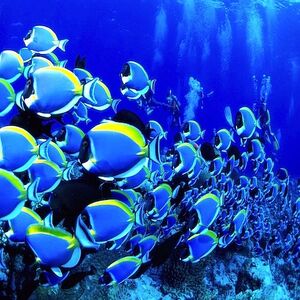
Acanthurus achilles is a highly prized, striking marine fish featuring a deep black body, vibrant orange teardrop marking, and blue-white highlights on the fins. Known for being active and somewhat delicate, they require experienced care, a minimum of 150–180 gallons, and strong, well-oxygenated water flow. They are herbivorous, needing extensive grazing (nori, algae) and are prone to stress-related ich, making them best for established tanks.
Key Aspects for the Aquarium Hobby:
Appearance: Distinctive, dark, almost black, with a bright orange teardrop at the base of the tail and white/blue accents on the fins.
Size & Lifespan: Grows to 9-10 inches (25 cm) and can live for over 10 years.
Temperament: Generally aggressive towards other tangs and food competitors;best kept as the only Acanthurus species in the tank.
Tank Requirements: A minimum 150-180 gallon tank is necessary for swimming space. High, turbulent water flow is recommended to mimic their natural surge zone habitat.
Diet: Primarily herbivorous. They require constant grazing opportunities on algae-based foods, including Nori (dried seaweed), algae clips, and spirulina, supplemented with high-quality frozen food.
Health Sensitivity: Highly susceptible to marine ich (𝐶𝑟𝑦𝑝𝑡𝑜𝑐𝑎𝑟𝑦𝑜𝑛𝑖𝑟𝑟𝑖𝑡𝑎𝑛𝑠) and, when stressed, can fall ill quickly, requiring quarantine and stable water parameters
The Pseudanthias flavoguttatus, or red saddled anthias, is a pink to purplish marine fish with a yellowish head and a distinctive row of red saddles along its back. This species is known for its vibrant colors, peaceful nature, and compatibility with reef tanks. They are deep-water fish that prefer dim lighting and should be fed a carnivore diet of meaty foods multiple times a day.
Appearance
Color: Pink to purplish body with a yellowish head.
Saddles: A row of red saddles or bars with pale areas along its back, ending in a large red blotch on the upper caudal peduncle.
Male features: Males have an elongated third dorsal-fin spine and a yellowish tinge to their anal fin.
Size: Can grow up to 4.5 inches (about 11 cm).
Behavior and temperament
Temperament: Peaceful and active, with a disinterest in corals or invertebrates.
Social structure: They are schooling fish and are best kept in groups, though they can live in pairs or smaller groups.
Social dynamics: They are hermaphroditic, meaning the largest female in a group may turn into a male if the existing male dies.
Aquarium care
Tank size: A minimum of 70-80 gallons is recommended, ideally larger for groups.
Diet: A carnivore that requires frequent feedings (several times a day) of meaty foods such as frozen brine or mysis shrimp.
Lighting: Prefer low to moderate lighting as they are deep-water species.
Aquascaping: Should be provided with plenty of live rock for hiding, as well as open areas for swimming.
Compatibility: Reef safe and peaceful, but should not be mixed with other anthias species.
Experience level: Considered difficult to care for and not suitable for beginners, often requiring professional experience
Chrysiptera talboti, or Talbot's Demoiselle, is a small fish (up to 6 cm) characterized by a bright yellow head and pelvic fins, a purplish-grey body, and a prominent black spot on its dorsal fin. It has a distinctive black anal papilla, a pinkish tinge to its body, and is often found solitary in reef depressions.
Appearance
Body: Purplish-grey or pearly grey with a pinkish tinge.
Head and pelvic fins: Bright yellow.
Dorsal fin: A large black spot is located at the base of the spinous part of the dorsal fin, usually over the last four spines.
Anal fin: A black anal papilla is present.
Size: Reaches a maximum length of about 6 cm (2.4 inches).
Behavior and habitat
Habitat: Inhabits coral-rich areas, such as seaward reef slopes and deep lagoons.
Social behavior: Usually solitary, but can be found in groups in its natural habitat. In an aquarium, they are known to be territorial, especially as they mature, and may become aggressive toward other damselfish.
Activity: Active and diurnal (active during the day).
Temperament: Can range from peaceful to moderately aggressive, depending on age and environment.
Other characteristics
Diet: Feeds on zooplankton and planktonic crustaceans in its natural habitat. In captivity, they will accept flakes, pellets, and meaty foods.
Reproduction: Oviparous (egg-laying) and protandric hermaphrodites, meaning they are born male and change to female as they age
The Orangeback fairy-wrasse (Cirrhilabrus aurantidorsalis) is a small, colorful fish known for its vibrant orange back, which contrasts with a magenta stripe along its body and a shimmering belly. Males are more intensely colored, especially during courtship, and have a dark red "crown" marking. They inhabit coral reefs in the Indo-Pacific, live in small groups with one male and several females, and are popular in the aquarium trade for their peaceful nature and activity level.
Appearance
Coloration:
Has a brilliant orange or golden-orange back, a magenta stripe running the length of the body, and a belly that can be pink, blue, or purple.
Male features:
Males have more intense colors and a dark red crown-like marking on the head. During courtship, their colors intensify significantly.
Female features:
Females are less vibrant, with a reddish-brown body, white face, and white belly.
Body shape:
Slender and elongated body.
Habitat and behavior
Habitat:
Found in the Indo-Pacific, specifically in the eastern Tomini Bay and Lembeh Strait, on reef slopes and edges with rubble areas.
Social structure:
Lives in small groups (harems) consisting of one male and several females. All are believed to start as females, with some transforming into males.
Temperament:
Peaceful and active fish, making them suitable for reef aquariums. They are reef-safe and will not harm corals or invertebrates.
Jumping:
Known to be good jumpers, so a tight-fitting lid on the aquarium is essential.
Diet
Primary food: Zooplankton.
Aquarium diet: Readily accepts a variety of meaty foods, such as frozen mysis shrimp, brine shrimp, and other high-quality flakes, pellets, and frozen/live foods.