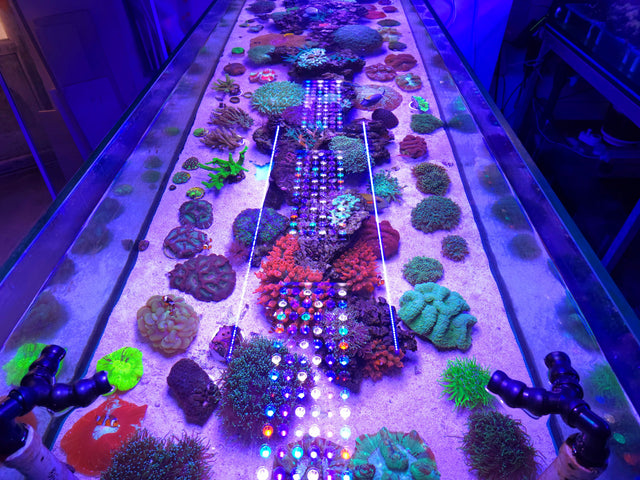
The Purple Linckia Starfish (Linckia sp., often L. laevigata color morph or Leiaster teres) is a striking echinoderm known for its deep purple coloration, long, slender, cylindrical arms with rounded tips, and sometimes a "fuzzy" or smooth, firm texture. These sea stars are popular in the marine aquarium hobby for their vibrant color and peaceful nature, though they are considered expert-only due to specialized feeding requirements.
Description and Characteristics
Coloration: Ranges from deep purple to lavender, often with a velvety, "fuzzy" appearance.
Size: Can grow up to 30 cm (11.8 in) in diameter, with aquarium specimens often seen around 8 inches.
Arms: Five long, cylindrical arms that are slightly tapered, often appearing like "Play-Doh" models.
Tube Feet: Possesses short, bright yellow tube feet used for movement, which contrasts with the purple body.
Regeneration: Possesses remarkable regenerative capabilities, able to regenerate a whole new star from a single severed arm.
Habitat and Behavior
Range: Found throughout the tropical Indo-Pacific region, inhabiting coral reefs and seagrass beds at depths of 6 to 85 meters.
Diet: Primarily a detritivore and scavenger, feeding on bacterial films, sponges, and microorganisms on rocks.
Activity: Generally active during the day, moving slowly across rocks and sand.
Aquarium Care Requirements
Acclimation: Requires a very slow, long drip acclimation (at least 2.5 to 4 hours) to adjust to new water parameters.
Tank Size: Requires large, well-established aquariums (usually 55-100+ gallons) with ample live rock to support their feeding needs.
Sensitivity: Very intolerant of sudden changes in salinity, pH, and oxygen levels. They are highly sensitive to copper-based medications.
Diet in Captivity: Feeds on established bacteria films and microfauna in the tank; they are difficult to target-feed, making a mature tank essential.
Percnon planissimum, commonly known as the flat rock crab or nimble spray crab, is a small, highly compressed, and rapid-moving crab (3-6 cm) found in tropical Indo-Pacific shallow rocky shores and coral reefs. Identified by its mottled brown/red color, bright green-blue stripes, and yellow-orange leg segments, this species inhabits shallow, turbulent waters, hiding under
Key Characteristics
Appearance: Extremely flat, orbicular carapace (rounded) which allows them to fit into tight rocky crevices.
Coloration: Distinctively mottled brown to reddish with bright yellow/beige longitudinal stripes, often featuring blue highlights.
Size: Generally, the carapace width ranges from 3 to 6 cm.
Limbs: The walking legs often have yellow-orange tips.
Distinguishing Feature: Unlike P. gibbesi (which has banded legs), P. planissimum is recognized by yellowish streaks on the legs, though they are often confused.
Habitat and Behavior
Location: Found in the tropical Indo-Pacific from East Africa to Japan, Hawaii, and the Philippines.
Environment: Intertidal zone, coral reef flats, and exposed rocky shores, often found in shallow, turbulent water (0–30 meters).
Behavior: Known for being fast-moving and shy, retreating quickly into cracks when disturbed.
Diet: Primarily herbivorous, feeding on algae, but sometimes omnivorous, consuming small invertebrates and detritus.
P. planissimum belongs to the family Percnidae and is a common species in its native range, often seen clinging to rock walls in the intertidal zone
Green Seriatopora hystrix (Bird's Nest Coral) is a fast-growing,, popular SPS (Small Polyp Stony) coral featuring delicate, thin, intertwined branches and vivid neon-green coloration, particularly under blue lighting. It requires high light, strong flow, and stable parameters
24−27∘𝐶
1.025−1.026SG). It is considered a great beginner-to-intermediate SPS.
Key Characteristics & Care Details:
Appearance: Features thin, delicate, branching, or needle-like structures that form a dense colony, often described as a bird's nest.
Coloration: Typically, it displays a bright green to neon-green, sometimes with subtle yellow-green or white tips.
Lighting: Requires moderate to high, or high lighting, particularly when using LED or T5, to maintain its bright green color.
Flow: Requires moderate to strong, turbulent water flow to remove waste from its dense branches and provide nutrients.
Placement: Best positioned in the middle to top, or on top rocks to receive direct light and flow.
Water Parameters: Maintain stable, low-nutrient conditions:
Temperature:24−27∘𝐶
Salinity:1.025−1.026 SG.
Calcium:400-450 ppm
Alkalinity:8−9dKH.
Magnesium:1250−1350ppm.
Feeding: Primarily photosynthetic, but benefits from occasional feeding with phytoplankton, zooplankton, or amino acids.
Difficulty: Considered a beginner-friendly, fast-growing SPS.
Fragility: The branches are very thin and delicate, making them prone to snapping if handled roughly or during cleaning.
The green S. hystrix is a popular choice for reef aquariums as it offers significant, fast, and dense, delicate growth that adds intense color.
Acropora (or "Acros") are highly sought-after, fast-growing Small Polyp Stony (SPS) corals known for their brilliant colors and complex branching or plating structures.
As "crown jewels" of the reef hobby, they require intense lighting 250−600 PAR, high turnover water flow, and strict, stable water parameters, making them best for experienced aquarists.
Mithraculus sculptus (Emerald Crab) is a popular, hardy, nocturnal reef-safe scavenger (up to 2 inches) known for eating nuisance bubble and hair algae. Native to the Caribbean, they feature a vibrant green, flat shell and hairy legs. They require plenty of live rock for hiding and are generally peaceful, though they may prey on small fish or corals if underfed.
Key Details for the Hobbyist:
Care Level: Easy.
Diet: Omnivore/Herbivore. Consumes bubble algae, green hair algae, and leftover meaty foods.
Tank Conditions: 75–82°F (24–28°C), pH 8.1–8.2, salinity 1.024–1.026.
Behavior: Generally peaceful, but can be opportunistic; may harm small, slow fish or sessile invertebrates if not enough algae is available.
Size: Up to 2 inches (5 cm) in width.
Habitat: Requires plenty of rockwork/crevices.
Reef Safe StatusWhile generally considered reef-safe, Mithraculus sculptus is best described as "reef-safe with caution," as they may pick at soft corals or LPS if they are underfed. They are considered highly effective for managing bubble algae (Valonia) outbreaks.
Acanthurus achilles is a highly prized, striking marine fish featuring a deep black body, vibrant orange teardrop marking, and blue-white highlights on the fins. Known for being active and somewhat delicate, they require experienced care, a minimum of 150–180 gallons, and strong, well-oxygenated water flow. They are herbivorous, needing extensive grazing (nori, algae) and are prone to stress-related ich, making them best for established tanks.
Key Aspects for the Aquarium Hobby:
Appearance: Distinctive, dark, almost black, with a bright orange teardrop at the base of the tail and white/blue accents on the fins.
Size & Lifespan: Grows to 9-10 inches (25 cm) and can live for over 10 years.
Temperament: Generally aggressive towards other tangs and food competitors;best kept as the only Acanthurus species in the tank.
Tank Requirements: A minimum 150-180 gallon tank is necessary for swimming space. High, turbulent water flow is recommended to mimic their natural surge zone habitat.
Diet: Primarily herbivorous. They require constant grazing opportunities on algae-based foods, including Nori (dried seaweed), algae clips, and spirulina, supplemented with high-quality frozen food.
Health Sensitivity: Highly susceptible to marine ich (𝐶𝑟𝑦𝑝𝑡𝑜𝑐𝑎𝑟𝑦𝑜𝑛𝑖𝑟𝑟𝑖𝑡𝑎𝑛𝑠) and, when stressed, can fall ill quickly, requiring quarantine and stable water parameters
Frozen cyclops is a small, fresh-frozen zooplankton food for fish and other aquatic animals, including fish larvae, small-mouthed fish, and marine invertebrates like corals. It is a nutritious, natural live-food alternative that can also promote vibrant colors in fish. The food is typically sold in convenient cubes or blister packs and is often gamma-irradiated to be pathogen-free.
What it is
Zooplankton: Made from tiny, fresh-frozen crustacean zooplankton.
Food for small mouths: An ideal food for fish larvae (fry), small-mouthed fish, seahorses, and pipefish.
Supports filter feeders: Excellent for marine filter-feeding invertebrates and corals.
Natural color enhancer: Contains natural pigments that can help promote vibrant colors in fish.
Pathogen-free: Often gamma-irradiated for safety.
How to use
Break off a small portion, such as a single cube.
Thaw it in a separate container with a small amount of tank water for about 20 minutes. Avoid using hot water or a microwave, as this can break down nutrients.
Slowly add the defrosted food to your aquarium.
Repeat a few times a week to help maintain health and color
"Krill Fine" is a frozen fish food consisting of finely chopped krill, ideal for smaller or more finicky fish like adult Discus, or for use as a base mix for larger species. It is a high-protein, nutrient-rich food that is a natural source of omega-3 fatty acids and astaxanthin, which enhances color. The fine size makes it easy to digest and encourages a feeding response in many fish.
Nutritional information
Protein: High in protein, typically around 50-55% dry matter.
Fat: Contains essential lipids, with up to 25% of the fat content consisting of omega-3 fatty acids.
Vitamins and minerals: A natural source of vitamins, carotenoids like astaxanthin (which enhances color), and other antioxidants.
Chitin: A good source of chitin, which can provide roughage.
Benefits
Enhances color:
The natural carotenoids, particularly astaxanthin, help intensify the red and other colors in fish.
Stimulates feeding:
The fine texture is a natural and appealing food source that can trigger an immediate feeding response.
Promotes health:
The high protein and essential fatty acids support overall health, energy levels, and proper growth.
Versatile:
Can be used as a staple food or as an additive for larger species in products like spod and stick mixes.
How to use
Store the frozen krill in a freezer and only thaw the amount you need for one feeding.
You can thaw it in a small amount of aquarium water before feeding, or in some cases, feed it while still frozen.
Only feed what your fish can consume within a few minutes to avoid soiling the aquarium.
Mangrove trees are salt-tolerant plants that are grown in saltwater aquariums for their aesthetic appeal and natural nutrient control capabilities. They filter salt from the water through their roots and can help reduce nitrates, phosphates, and other organic waste. In the aquarium, they have visible roots and leaves that create a unique, natural-looking environment, but they require high light, proper water parameters, and can consume nutrients so heavily that you may need to supplement them.
The brackish aquarium - Algone
Brackish habitats can be found in nature throughout the world where river deltas meet the ocean. These environments are known as e...
Error! Filename not specified.
Algone
Red Mangrove Buy 2 Get 1 FREE | Saltwater Plants
This plant tolerates poor water quality and weak water movement. However, it ( red mangrove (Rhizophora mangle ) is adapted to liv...
Error! Filename not specified.
AlgaeBarn
Adaptations and functions
Salt filtration:
Mangroves have evolved to filter out about 90% of the salt as it enters their roots. Some species can also excrete salt through glands on their leaves.
Nutrient control:
They act as a natural filter for the aquarium, consuming nitrates, phosphates, and other organic waste. Larger mangroves are more effective at this.
Aesthetics:
Their unique stilt or prop roots, as seen in the popular Red Mangrove, create a beautiful and naturalistic look in the aquarium, especially in a reef tank or brackish setup.
Stress and care:
Mangroves are sensitive to nutrient fluctuations. If they consume too many nutrients, you may need to dose the tank with some nitrates and phosphates to prevent the corals from suffering. A lack of magnesium can also stress the plant.
Lighting:
They require high-output lighting, preferably in a warm white spectrum.
Any experience growing mangrove trees in aquariums? - Facebook
10.09.2022 г. — * Jeff Brinegar. You'll need very strong lighting. 3 yrs. * Jamie Lynn. So if you are looking for the cool roots of ...
Error! Filename not specified.
Facebook
Mangroves trees and shrubs
Silt roots: In some mangrove species, roots diverge from stems and branches and penetrate the soil some distance away from the mai...
Food and Agriculture Organization
Elevate Your Aquarium with Home-Grown Mangroves
Red mangroves have the ability to replace sodium ions, which are present in salt water, with magnesium ions. If you have a salt wa...
Error! Filename not specified.
TopTropicals.com
Mangroves in the Wild & Aquarium | Tropical Fish Hobbyist ...
Mangroves in the Wild and in the Home Aquarium. Author: Richard Aspinall. Salt-tolerant plants that are as unusual as they are bea...
Error! Filename not specified.
TFH Magazine
Aquarium setup and care
Lighting:
Provide moderate to high lighting, ideally with a PAR (Photosynthetically Active Radiation) value between 200 and 600.
Water parameters:
Keep the water temperature between 78–83°F and the salinity up to1.024
specific gravity (sg). The ideal pH is 7.0–8.4 and dKH 8–12.
Root placement:
For the most striking look, allow the roots to hang suspended in the water, rather than burying them.
Leaf care:
Regularly misting the leaves with freshwater can help avoid a buildup of salt on the leaf surfaces.
Substrate:
Plant the pods in a substrate like sand or a "miracle mud".
Nutrient balancing:
Monitor nutrient levels, especially nitrates and phosphates, as mangroves can "bottom out" the tank, which can stress other inhabitants. Be prepared
The Forest Fire Rhodactis mushroom is a soft coral known for its vibrant, fiery colors, typically a red or orange base with neon green, blue, or purple streaks and speckles that glow under aquarium lighting. It has a fleshy, textured appearance with wavy edges and is relatively easy to care for, thriving in low to moderate lighting and low water flow, making it a popular choice for beginner to experienced aquarists.
Appearance
Color: A bright base of red or orange with contrasting neon green, blue, or purple patterns that appear to glow.
Shape: Fleshy, with a bubble-like or wavy surface and textured edges.
Growth: Fast-growing and can spread to form a colorful carpet, filling negative space in an aquarium.
Care and maintenance
Lighting: Low to moderate lighting is ideal, around 30-50 PAR.
Water Flow: Low to moderate flow is preferred. Too much flow can stress the coral and cause it to detach from its rock.
Tank Placement: Can be placed in low to mid-level areas of the tank.
Care Level: Generally considered easy to care for.
Re-attachment: If the coral detaches, place it in a small cup with rubble to re-attach, or it may float around the tank.
The Pseudanthias flavoguttatus, or red saddled anthias, is a pink to purplish marine fish with a yellowish head and a distinctive row of red saddles along its back. This species is known for its vibrant colors, peaceful nature, and compatibility with reef tanks. They are deep-water fish that prefer dim lighting and should be fed a carnivore diet of meaty foods multiple times a day.
Appearance
Color: Pink to purplish body with a yellowish head.
Saddles: A row of red saddles or bars with pale areas along its back, ending in a large red blotch on the upper caudal peduncle.
Male features: Males have an elongated third dorsal-fin spine and a yellowish tinge to their anal fin.
Size: Can grow up to 4.5 inches (about 11 cm).
Behavior and temperament
Temperament: Peaceful and active, with a disinterest in corals or invertebrates.
Social structure: They are schooling fish and are best kept in groups, though they can live in pairs or smaller groups.
Social dynamics: They are hermaphroditic, meaning the largest female in a group may turn into a male if the existing male dies.
Aquarium care
Tank size: A minimum of 70-80 gallons is recommended, ideally larger for groups.
Diet: A carnivore that requires frequent feedings (several times a day) of meaty foods such as frozen brine or mysis shrimp.
Lighting: Prefer low to moderate lighting as they are deep-water species.
Aquascaping: Should be provided with plenty of live rock for hiding, as well as open areas for swimming.
Compatibility: Reef safe and peaceful, but should not be mixed with other anthias species.
Experience level: Considered difficult to care for and not suitable for beginners, often requiring professional experience